
BLOG
How Does Cargo Weight Affect Heavy Vehicle Towing?
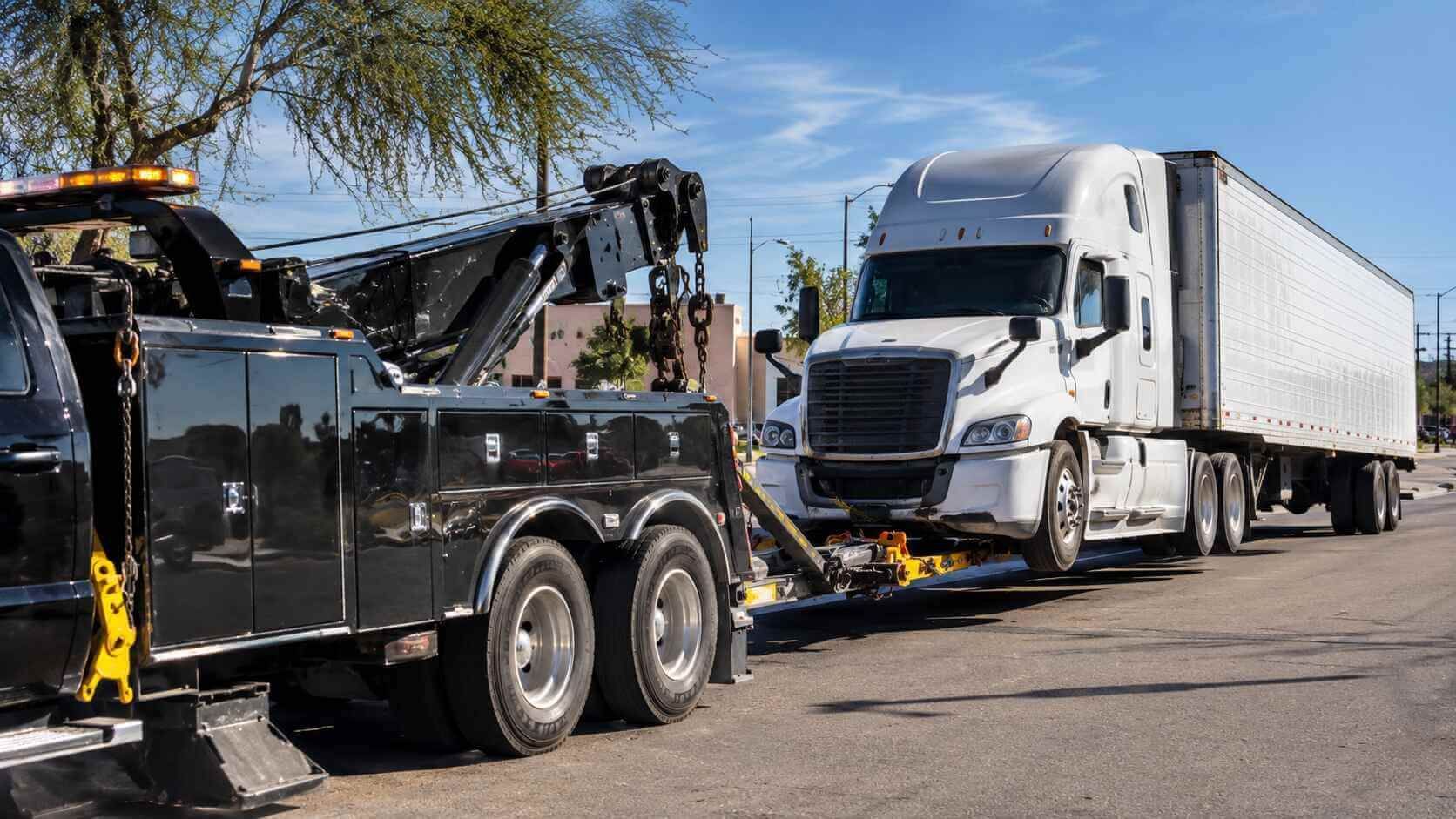
Cargo weight affects heavy vehicle towing because the total load influences the equipment, recovery approach, vehicle positioning, and transportation requirements needed to move a disabled commercial vehicle safely. At Sun City Towing Inc., we consider the vehicle and its load when planning heavy-duty towing and recovery for trucks, trailers, and other large vehicles.
A commercial truck with a full load can present different towing considerations than the same vehicle without cargo. Weight distribution, vehicle condition, accessibility, and the way the load is secured can all affect how a towing operator approaches the situation.
For fleet managers and commercial drivers, understanding this relationship can make it easier to provide useful information when requesting a heavy towing service.
Why Does Cargo Weight Matter During Heavy Vehicle Towing?
The weight of the cargo contributes to the vehicle's overall weight. In practical terms, a towing operator is not simply dealing with an empty truck or trailer; the vehicle may also be carrying equipment, materials, products, or other freight.
Federal Highway Administration terminology distinguishes between the weight of a vehicle and its load and the combined weight of a powered vehicle, trailer or trailers, and cargo. This means the cargo is an important part of understanding the total transportation configuration.
For a towing provider, knowing whether a commercial vehicle is empty, partially loaded, or carrying a substantial load can therefore provide useful information before the recovery begins.
Does the Cargo Weight Change the Towing Approach?
It can. A heavier vehicle may require different equipment or a different recovery strategy than a lighter one.
Other factors still matter, including:
- The type of truck or trailer
- The vehicle's condition
- Whether the vehicle can move
- The location of the breakdown
- How accessible the vehicle is
- The destination
- The way the cargo is positioned and secured
Cargo weight is therefore one part of the overall assessment rather than the only factor that determines how a vehicle should be handled.
How Does Weight Distribution Affect a Disabled Truck?
The total weight of a load is important, but where that weight is positioned can also matter.
A load that is unevenly distributed can change how weight is carried across the vehicle or trailer. This can affect the vehicle's balance and the way it responds during transportation.
For example, imagine a commercial truck carrying a heavy piece of equipment toward the rear of a trailer. The total cargo weight may be within the expected range for the vehicle, but its position could still affect how the combination is balanced.
That is one reason towing operators need accurate information about the vehicle and its load rather than relying only on the vehicle's make and model.
What Information About Cargo Should You Give a Towing Dispatcher?
When requesting truck towing, provide as much accurate information as you reasonably can.
Useful details include:
- Whether the vehicle is loaded or empty
- The approximate cargo weight, if known
- The type of cargo
- Whether the cargo is secured
- Whether a trailer is attached
- Whether the truck or trailer can move
- The vehicle's location
- Any visible damage or unusual positioning
You do not need to calculate the exact weight yourself if that information is unavailable. Simply explaining what the vehicle is carrying can still help the dispatcher understand the situation.
For example, "The tractor-trailer is loaded with construction materials and cannot move" gives us more useful context than simply saying, "The truck is broken down."
Does Cargo Type Matter as Well as Cargo Weight?
Yes. Weight is important, but the type, shape, and physical characteristics of cargo can also affect how a commercial vehicle is handled.
A load may consist of construction materials, machinery, equipment, packaged goods, or another type of freight. Some cargo may have dimensions or characteristics that require additional consideration during transportation.
Federal Motor Carrier Safety Administration guidance explains that cargo carried by commercial motor vehicles must be properly secured against shifting or falling, with specific requirements applying to certain categories of heavy equipment and machinery.
For towing purposes, the important point is that cargo is part of the overall vehicle condition. Operators need to know what they are dealing with before determining how to move the vehicle.
Did You Know? FMCSA Has Specific Rules for Heavy Equipment
According to the Federal Motor Carrier Safety Administration (FMCSA), federal cargo-securement rules specifically address heavy vehicles, equipment, and machinery that operate on wheels or tracks and individually weigh 10,000 pounds or more, including front-end loaders, bulldozers, tractors, and power shovels.
This makes weight an important consideration when large equipment is being transported, particularly when determining how the equipment should be secured and handled.
How Can Cargo Weight Affect Equipment Selection?
A heavy duty towing service may involve specialized equipment because large commercial vehicles can have substantially different transportation requirements from passenger vehicles.
The towing provider may need to consider the vehicle's overall configuration, including its cargo and trailer, before determining what equipment is appropriate.
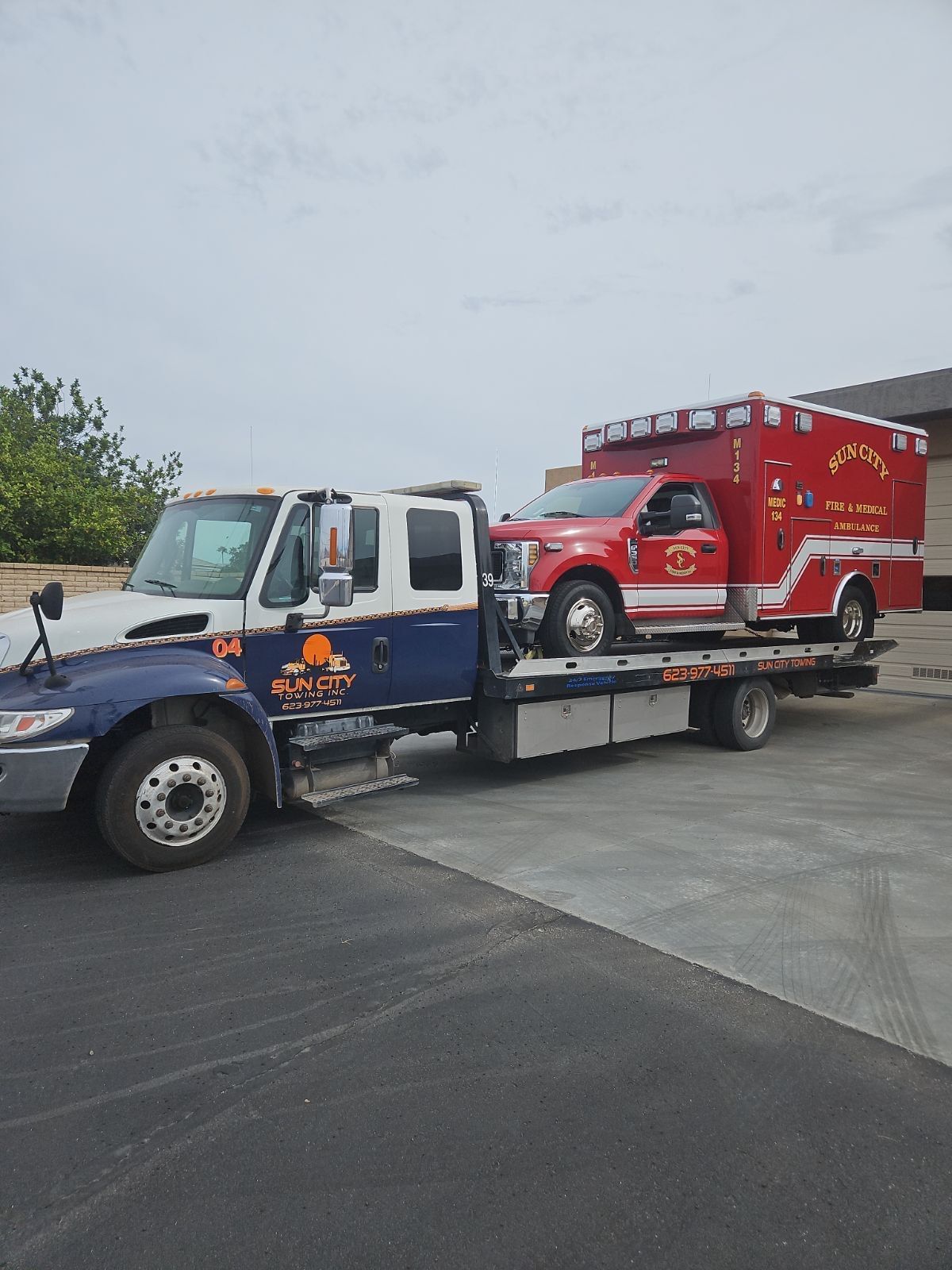
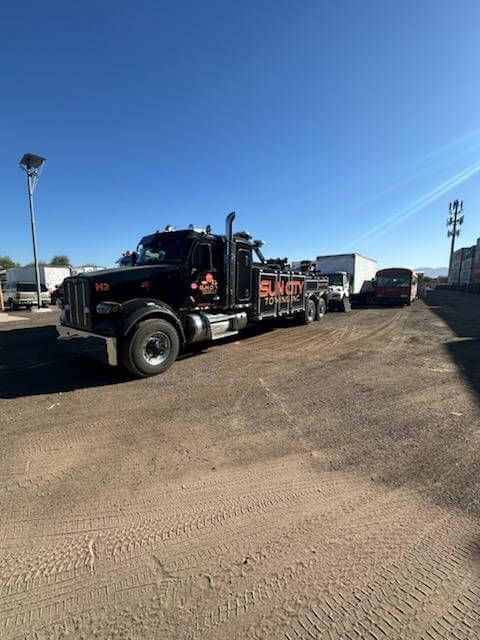
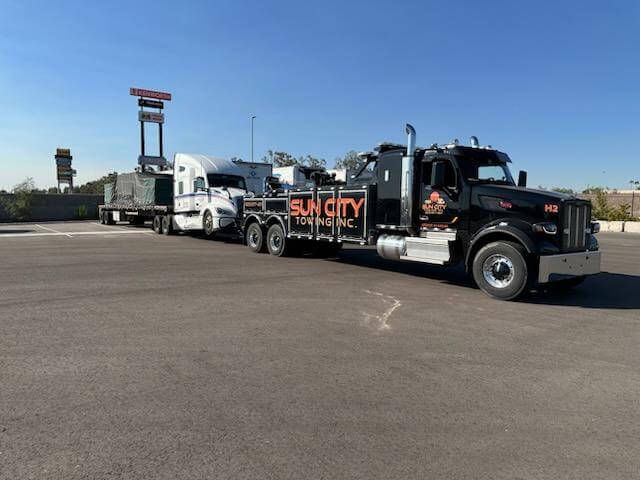
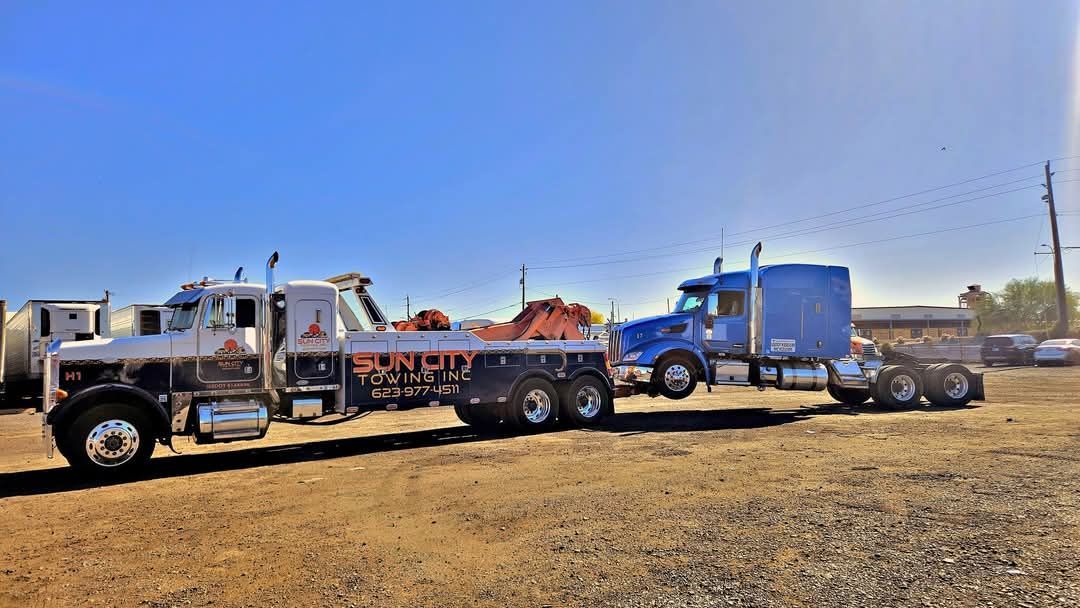
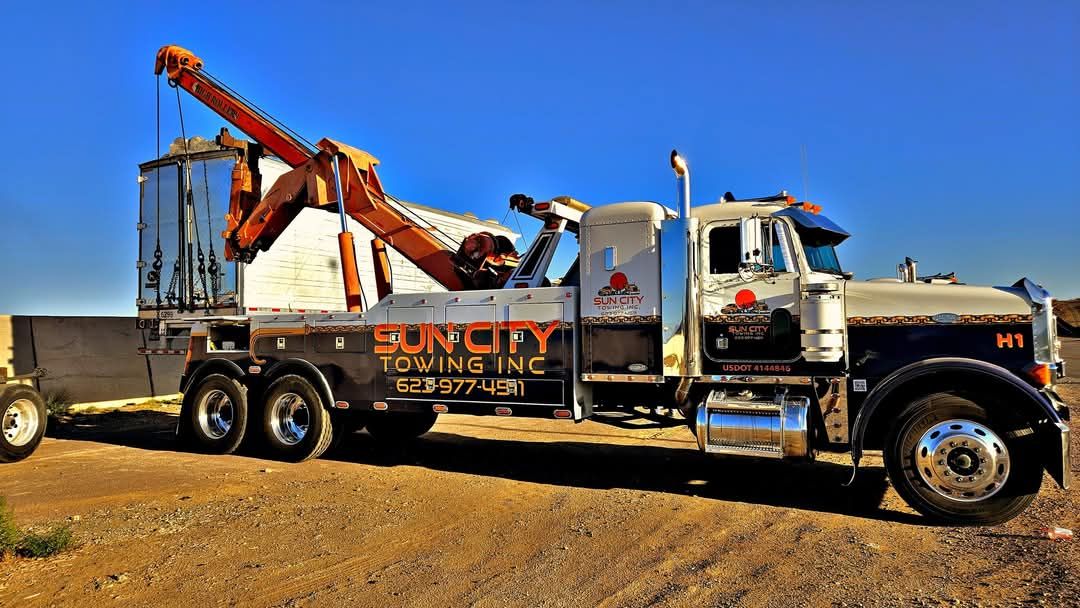
At Sun City Towing Inc., our heavy-wrecker services are designed for large vehicles such as commercial trucks, tractor-trailer combinations, buses, construction equipment, RVs, semi-trailers, and other heavy machinery. We also provide Landoll trailer transport for certain equipment, machinery, containers, and disabled commercial vehicles.
This range of vehicle types is one reason accurate information at the beginning of a towing request is useful.
What Happens If a Loaded Truck Breaks Down?
A loaded truck that becomes disabled may require a more careful assessment than an empty vehicle. The operator needs to understand the truck's condition, its location, and what it is carrying before determining how the vehicle should be handled.
Consider two examples.
Example 1: An Empty Commercial Truck
An empty commercial truck experiences a mechanical problem at a commercial property and cannot continue driving. The operator can provide the truck's location, type, condition, and destination to the towing dispatcher.
The lack of cargo may simplify some aspects of the assessment, although the truck's condition and size still determine the appropriate towing approach.
Example 2: A Loaded Tractor-Trailer
A loaded tractor-trailer becomes disabled on a roadway. In addition to the truck's mechanical condition and location, the towing provider needs to know that the trailer is loaded and, if available, the approximate cargo information.
The additional weight can affect the transportation requirements and should be communicated before assistance is dispatched.
These examples demonstrate why "truck won't move" is only part of the information a towing provider may need.
Should You Unload Cargo Before Requesting Towing?
Not necessarily, and drivers should not attempt to move, unload, or redistribute heavy cargo simply to make a towing situation easier unless that work is appropriate, authorized, and can be performed safely.
Cargo may be heavy, unstable, difficult to access, or part of a larger commercial load. Attempting to change the load without proper equipment or training can create additional risks.
Instead, tell the towing provider what the vehicle is carrying and explain any known concerns about the load. The towing team can then consider that information when planning the response.
How Does Cargo Weight Affect Recovery After an Incident?
Cargo weight can also matter when a commercial vehicle has been involved in an accident or has ended up in a difficult position.
For example, a loaded truck that has shifted position after an incident may require a different assessment from an empty truck. The operator may need to consider the vehicle's condition, the location, the load, and how the vehicle can be safely accessed.
Sun City Towing Inc. provides heavy-wrecker recovery for disabled and damaged large vehicles and states that its heavy-wrecker services include accident recovery involving heavy vehicles.
The specific recovery approach depends on the circumstances of the vehicle and its surroundings.
What Should Fleet Managers Know About Cargo Weight?
Fleet managers can make towing coordination easier by maintaining accurate information about the vehicles in their fleet.
Useful records may include:
- Vehicle type
- Trailer configuration
- Typical cargo carried
- Approximate operating weight
- Common operating locations
- Preferred repair destinations
- Emergency towing contact information
When a vehicle becomes disabled, having this information available can help the fleet manager communicate useful details to the towing provider.
It is especially helpful for fleets that regularly operate loaded commercial trucks because the towing provider may need to know whether the vehicle is carrying cargo before determining the appropriate response.
How Does Cargo Weight Affect Towing Costs?
Cargo weight can be one consideration when determining the complexity of a towing request, but it should not be treated as a standalone pricing formula.
Other factors can include:
- Vehicle type
- Distance
- Location
- Accessibility
- Recovery complexity
- Equipment required
- Condition of the vehicle
Sun City Towing Inc.'s heavy-wrecker page similarly notes that heavy-duty towing costs depend on factors including vehicle type, distance, and recovery complexity.
For an accurate estimate, provide the towing provider with as much information about the vehicle and situation as possible.
When Should You Request Heavy Towing for a Loaded Vehicle?
A loaded commercial vehicle may need professional towing when it cannot safely continue operating or cannot be moved using its own power.
Examples include:
- A semi-truck experiencing a serious mechanical failure
- A loaded commercial vehicle involved in a collision
- A truck or trailer that cannot safely continue
- A large vehicle that requires specialized equipment
- Construction equipment that cannot be moved independently
The important consideration is not simply how heavy the vehicle is. The combination of vehicle size, cargo, condition, location, and transportation requirements determines what type of professional assistance may be appropriate.
How Can Sun City Towing Inc. Help With Heavy Vehicle Towing?
At Sun City Towing Inc., we provide heavy-duty towing and recovery services for large vehicles throughout Arizona. Our heavy-wrecker capabilities include commercial trucks, tractor-trailer combinations, buses, construction equipment, semi-trailers, RVs, and other heavy machinery.
When you contact us about a large vehicle, information about the vehicle, cargo, location, condition, and destination helps us understand the situation before dispatch. If a Landoll trailer is more appropriate, we also offer Landoll transport for certain equipment, machinery, containers, and disabled commercial vehicles.
For Phoenix-area customers, our heavy duty towing services in Phoenix, AZ provide a direct resource for large-vehicle towing and recovery needs.
What Should You Do Before Calling for Heavy Vehicle Towing?
If a large commercial vehicle becomes disabled, gather the information that can be safely obtained without putting yourself or others at risk.
Be prepared to tell the dispatcher:
- Where the vehicle is located
- What type of vehicle it is
- Whether a trailer is attached
- Whether the vehicle is loaded
- What type of cargo it is carrying
- The approximate cargo weight, if known
- Whether the vehicle can move
- Whether there is visible damage
- Where the vehicle needs to go
You do not need to solve the towing problem yourself. Providing accurate information allows the towing provider to evaluate the situation and prepare an appropriate response.
Contact Sun City Towing Inc. for Heavy Vehicle Towing
Cargo weight is an important consideration in heavy vehicle towing because it contributes to the overall vehicle configuration and can affect how a disabled commercial vehicle is assessed, recovered, and transported. Providing accurate information about the vehicle and its load helps us better understand the towing situation before we arrive.
If you need professional
heavy duty towing, heavy towing service, or truck towing in the Phoenix area, contact Sun City Towing Inc. to discuss the vehicle, its cargo, location, and towing needs with our team.