
Vehicle Recovery in Phoenix, AZ
Vehicle recovery is the process of safely retrieving a vehicle that is stuck, damaged, disabled, or positioned where ordinary towing cannot begin immediately. It may involve winching, lifting, stabilizing, or repositioning the vehicle before it can be transported.
In Phoenix, recovery situations can happen on congested freeways, city streets, unpaved properties, parking areas, and desert roads. A car may leave the pavement after a collision, become stuck on unstable ground, or sustain damage that prevents a standard hookup. Sun City Towing, Inc. provides vehicle recovery services for drivers, businesses, and commercial operators throughout Phoenix and the surrounding area.
Every recovery begins with understanding the vehicle’s condition and surroundings. The goal is to regain control of the vehicle, reduce the risk of additional damage, and prepare it for transportation.
What Is Vehicle Recovery?
Vehicle recovery safely retrieves a car, truck, or commercial vehicle that is stuck, damaged, off the road, or unable to roll. A car recovery service may use winches, wheel lifts, recovery straps, and stabilizers to move the vehicle onto a stable surface.
Car recovery may be needed after a collision, mechanical failure, damaged wheel, loss of traction, or stop on uneven ground.
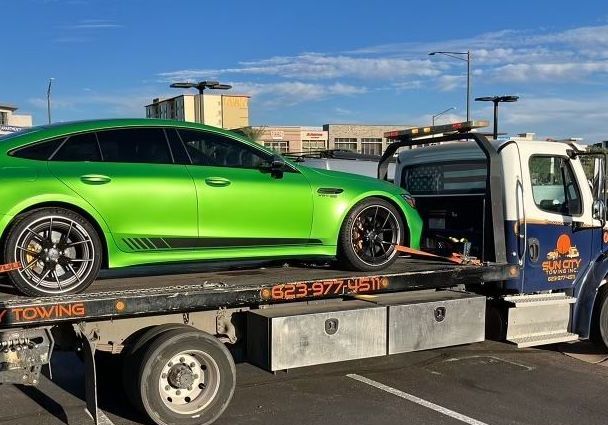
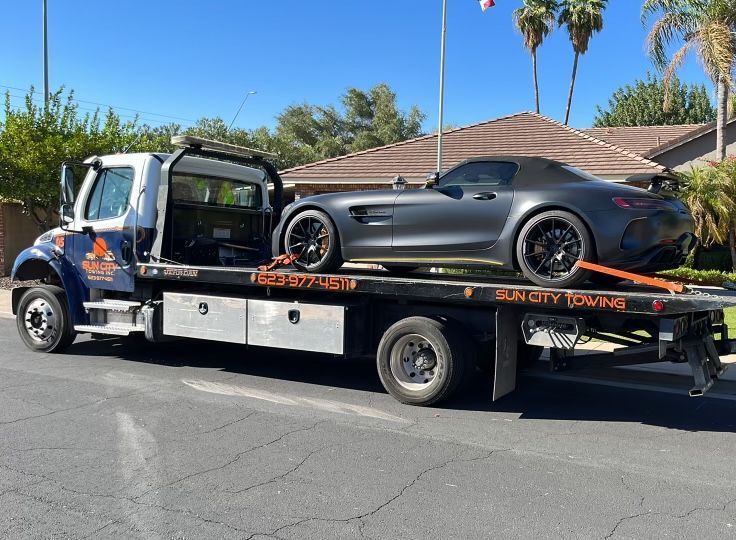
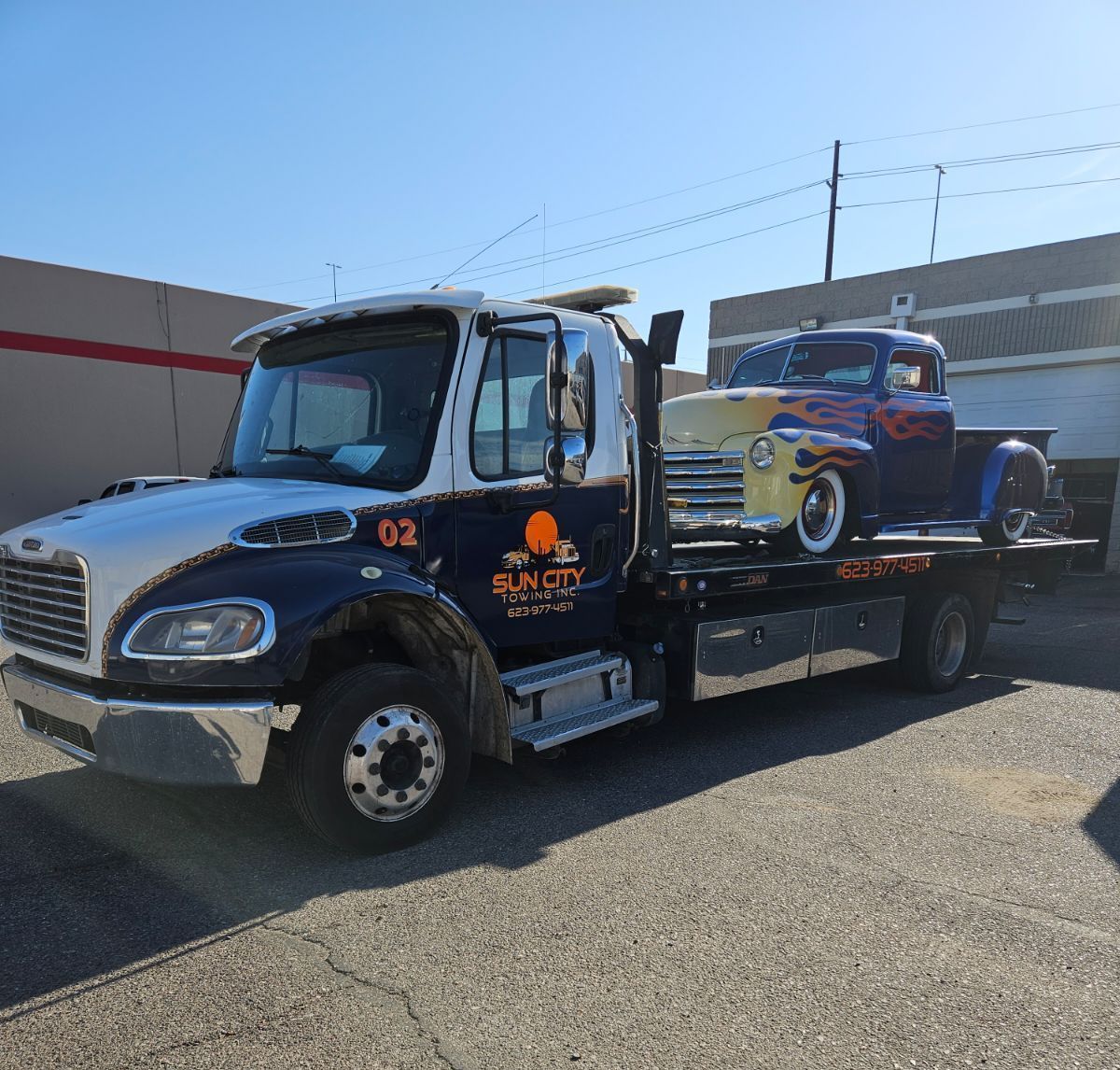
When Are Vehicle Recovery Services Needed?
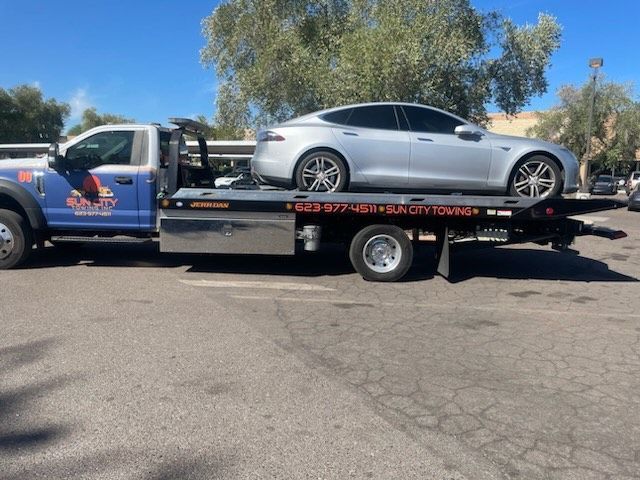
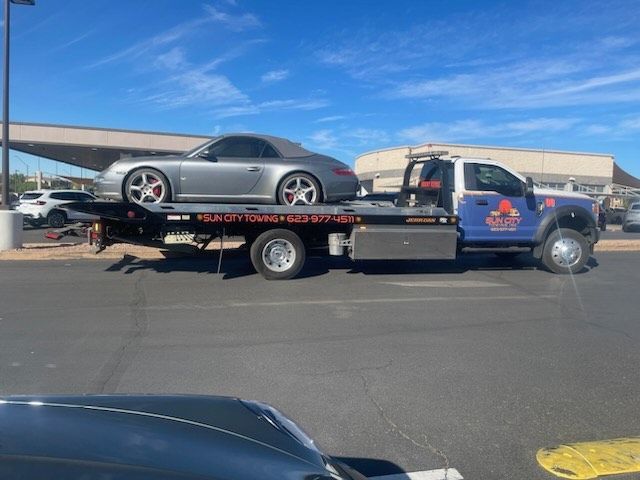
Vehicle recovery services are needed when a vehicle’s condition or position prevents a standard tow. Collision damage, locked wheels, unstable terrain, mud, sand, or loose gravel may require tow truck recovery to stabilize and reposition the vehicle before transport.
What Is the Difference Between Towing and Vehicle Recovery?
Towing transports an accessible vehicle to another location. Vehicle recovery frees or repositions a vehicle that cannot yet be safely towed.
For example, a disabled car in a parking lot may only need towing, while one on an embankment may require auto recovery towing before transport. Some situations require both recovery and towing.
Can Vehicle Recovery Help After an Accident?
Yes. A collision can leave a vehicle unable to steer, brake, roll, or support its weight normally. Damaged components may also prevent a standard towing connection.
The recovery operator may need to secure loose bodywork, manage damaged wheels, or reposition the vehicle away from a barrier. If the car is resting at an angle, its weight must be controlled carefully to prevent unexpected shifting.
An accident scene may also involve law enforcement, firefighters, emergency medical personnel, insurance representatives, and roadway crews. Clear communication helps keep the recovery organized while limiting disruption to other motorists.
The Arizona Department of Transportation reported 121,107 motor vehicle crashes across Arizona in 2024. Although not every collision requires vehicle recovery, this figure shows how often responders must manage damaged or disabled vehicles on Arizona roads.
Can Auto Recovery Towing Help with Off-Road Vehicles?
Auto recovery towing can help retrieve vehicles from dirt roads, desert access points, soft shoulders, and other unpaved locations. Because off-road conditions vary considerably, dispatch needs accurate information before determining the appropriate response.
Loose sand, mud, steep grades, drainage areas, and unstable ground can increase resistance and affect where a recovery truck can be positioned. A vehicle that appears only slightly stuck may have its axle, suspension, or undercarriage resting against the ground.
The operator must also identify a stable location for the recovery truck and establish a controlled pulling direction. Gate access, distance from pavement, overhead clearance, and nearby obstacles can influence the recovery plan.
Drivers should avoid repeatedly accelerating after the tires lose traction. Continued spinning can bury the vehicle more deeply and make car recovery more involved.
Why Phoenix Conditions Affect Vehicle Recovery
Phoenix includes busy freeways, dense city streets, industrial properties, unpaved lots, and desert terrain. Each environment creates different considerations for vehicle recovery services.
On Interstate 10 or Interstate 17, heavy traffic and limited shoulder space may affect how an operator approaches the vehicle. Downtown streets and parking areas can restrict truck positioning, while desert terrain may offer limited stable ground for recovery equipment.
Extreme heat is another practical concern. It can intensify mechanical problems and make waiting outside a vehicle uncomfortable. Drivers should provide their precise location, remain away from active traffic when possible, and follow instructions from emergency personnel.
Cross streets, highway directions, exit numbers, business entrances, landmarks, and map pins can help dispatch locate the vehicle and prepare an appropriate response.
What Information Should You Provide for Car Recovery?
Accurate information helps dispatch understand the recovery before the truck arrives. Begin with your exact location and explain whether the vehicle is on pavement, a shoulder, an incline, loose soil, or another surface.
Describe what happened and identify any visible damage. Dispatch should know whether the wheels turn, whether the vehicle can shift into neutral, and whether fluids are leaking. Mention if airbags deployed or if any part of the vehicle is touching the ground.
You should also provide the vehicle’s make and model, its position, nearby barriers or ditches, the distance from stable pavement, and whether police or other responders are present. Photos can be particularly helpful when the vehicle is off-road or resting at an unusual angle.
Do not stand close to a vehicle positioned on a slope or unstable surface. Wait in a safer area while the operator assesses the scene.
Protecting the Vehicle During Recovery
A damaged or immobilized vehicle can respond unpredictably when force is applied. Controlled movement and secure connection points are therefore essential during vehicle recovery.
Before pulling begins, the operator considers the vehicle’s weight, wheel position, direction of movement, and damaged areas. Recovery equipment must be connected to points capable of handling the required force rather than fragile body panels or components.
The vehicle may also need stabilization to prevent rolling, sliding, or shifting. Pulling force is applied gradually while the operator monitors how the vehicle responds. Adjustments may be made as the angle and resistance change.
After recovery, damaged wheels, steering parts, suspension components, and loose panels are evaluated before towing. This measured approach helps prevent the original problem from causing further vehicle damage.
Why Choose Us for Vehicle Recovery in Phoenix?
Sun City Towing, Inc. has served Arizona drivers and businesses since 1976. Over the decades, we have assisted with passenger vehicles, trucks, commercial vehicles, collision damage, difficult terrain, and complicated roadway positions.
Our car recovery service is available 24 hours a day because breakdowns and collisions do not follow a predictable schedule. When you call, our dispatch team gathers information about the vehicle, location, damage, and recovery conditions.
We work with individual motorists, commercial operators, businesses, and insurance providers. Our approach emphasizes clear communication, appropriate equipment, and careful preparation throughout the recovery and transportation process.
Trusted by Drivers and Businesses for Decades
Request Vehicle Recovery in Phoenix, AZ
When a vehicle is stuck, damaged, or positioned where an ordinary tow cannot begin, a careful recovery plan can help bring the situation under control.
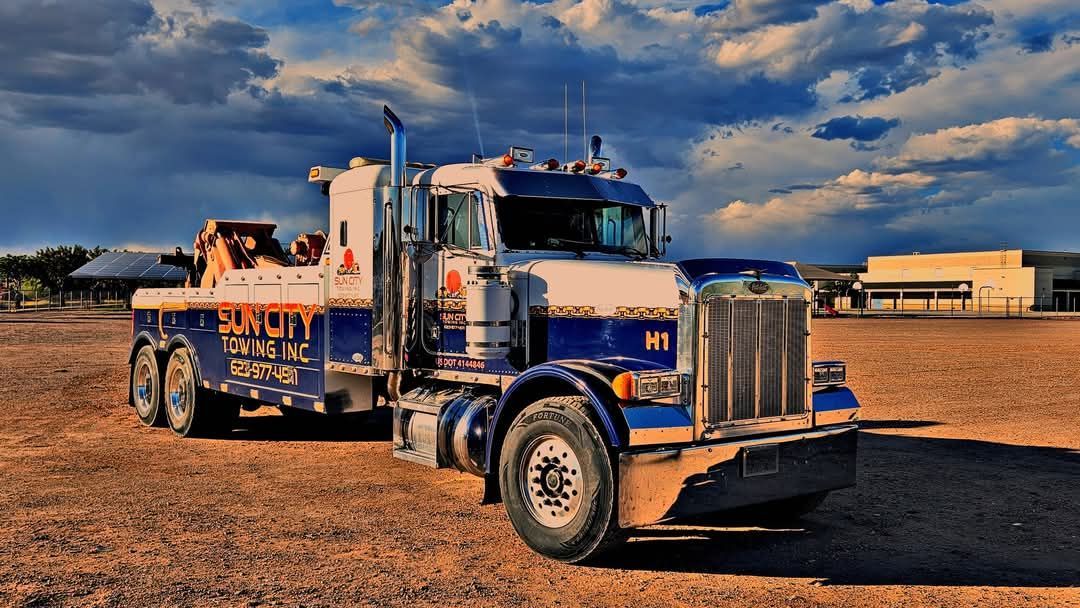
Sun City Towing, Inc. provides car recovery, heavy truck recovery, and tow truck recovery throughout Phoenix and surrounding communities. Call
(623) 977-4511 to explain your location, vehicle condition, and immediate concerns so we can determine the appropriate response.
Frequently Asked Questions About Vehicle Recovery
What is vehicle recovery?
Vehicle recovery is the process of retrieving, stabilizing, or repositioning a vehicle that is stuck, damaged, overturned, or unable to be towed normally. It may involve winching, lifting, or controlled movement before transportation begins.
What types of vehicles can be handled with car recovery services?
Car recovery services may assist passenger cars, SUVs, pickup trucks, vans, motorcycles, commercial trucks, buses, and other vehicles. The equipment used depends on the vehicle’s size, weight, condition, and location.
Can vehicle recovery help after an accident?
Yes. Vehicle recovery can reposition an accident-damaged car, move it away from a barrier, retrieve it from off the road, or place it on stable ground. It can then be prepared for transportation.
Do you provide emergency car recovery services in Phoenix, AZ?
Yes. Sun City Towing, Inc. provides emergency car recovery service in Phoenix and surrounding communities. Callers should provide their exact location, vehicle details, visible damage, and any immediate safety concerns.
What is the difference between towing and vehicle recovery?
Towing transports an accessible vehicle from one location to another. Vehicle recovery frees, stabilizes, or repositions a vehicle that cannot yet be towed safely. Some situations require recovery followed by towing.
Can auto recovery towing help with off-road vehicles?
Yes, depending on the terrain, access, vehicle weight, and surrounding conditions. Auto recovery towing may help vehicles stuck in sand, mud, loose gravel, soft shoulders, and uneven ground.
How long does a vehicle recovery service usually take?
Recovery time depends on the vehicle’s position, damage, terrain, accessibility, traffic, and weather. A basic winch-out may take less time than a collision recovery involving locked wheels, unstable ground, or limited working space.
Is vehicle recovery available 24/7?
Yes. Sun City Towing, Inc. provides vehicle recovery and dispatch assistance 24 hours a day, seven days a week, including weekends and holidays. Call (623) 977-4511 when immediate recovery assistance is needed.